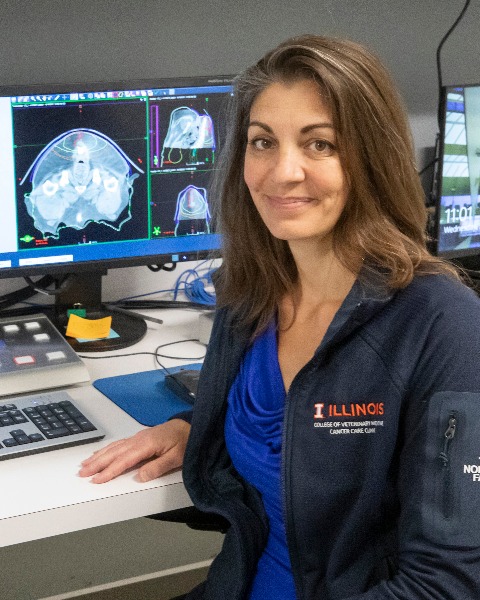
Associate Professor University of Illinois Urbana, Illinois
Soft tissue and bone sarcomas are locally aggressive, invading adjacent normal tissue and causing pain. Although osteosarcoma and high grade soft tissue sarcomas can have high metastatic rates, many sarcomas are unlikely to metastasize. These threaten quality and length of life because of local effects. Radiation therapy can supplement or replace surgery to achieve local control. For osteosarcoma, radiation can allow a pet owner to avoid amputation so long as pain is adequately controlled, however pathologic fracture can occur in up to 40% of cases. Additionally, the biologic behavior of osteosarcoma might change by preserving the primary tumor in the body while creating dormancy with radiation. Soft tissue sarcomas can extend invasive tendrils of tumor tissue into adjacent normal tissues, making surgical cure challenging. And yet, even if surgical margins are microscopically incomplete, some low grade tumors do not recur. The decision to pursue adjuvant radiation sometimes depends on the consequences of recurrence, even if small. Modern radiation therapy machines (most commonly linear accelerators) allow the radiation oncologist to approach these cases with many options. Low dose radiation can have anti-inflammatory or immunomodulatory effects, whereas high dose stereotactic body radiation therapy can ablate tumors in situ. Dose rate is a variable that is often overlooked, but low and ultra-high dose rates can have different biologic effects on tumor and normal tissue compared to standard settings. This talk will review how radiation can complement surgery and when it might replace excision, as well as advantages and disadvantages of various fractionation schemes and sequences of surgery and radiation, as well as the impact on the immune system. We will review current literature, compare to clinical concepts in human medicine, and look to the future of radiation in the multimodal treatment of sarcomas.